

The Shopify PIM that runs your catalog
Your product data is split across spreadsheets, supplier sheets, and the Shopify admin, and none of them agree. A Shopify PIM gives you one source of truth: import every feed, enrich and translate it, generate the photography, and publish to Shopify. Automated Commerce does the work, you set the direction.
Why consider Automated Commerce as your PIM
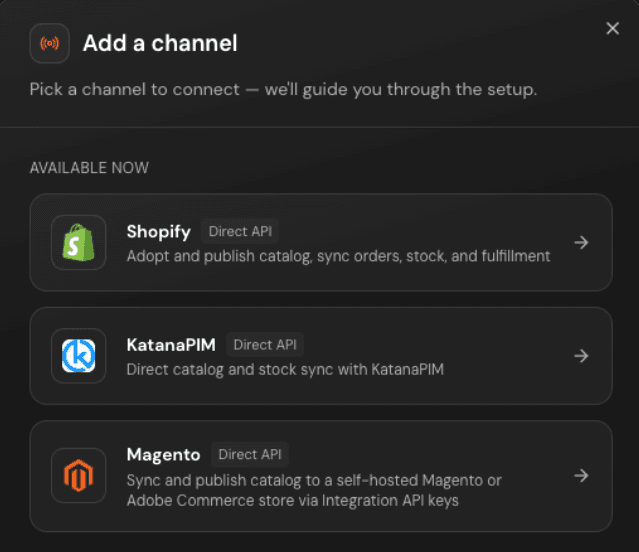
Built Shopify-native: Automated Commerce reads and writes products, variants, and metafields two ways, across Shopify Plus and every storefront you run, so your store and your product data never drift apart. On that foundation it enriches, photographs, translates, and publishes the catalog from one interface, live the same day.
Connect Shopify today, no implementation project
Most PIM systems start with a multi-month implementation, a data-modeling project, and an integrator's invoice. A Shopify PIM should not work that way. Install the app and Automated Commerce pulls products, variants, metafields, and media the same day, across Shopify Plus and every storefront you run, with no setup fee in the way.
- ✓Two-way sync for products, variants, and metafields
- ✓Shopify Plus, multiple storefronts, and B2B catalogs
- ✓Start on a free trial; no setup fee, no integrator
Everything the Shopify admin leaves to spreadsheets, in one place
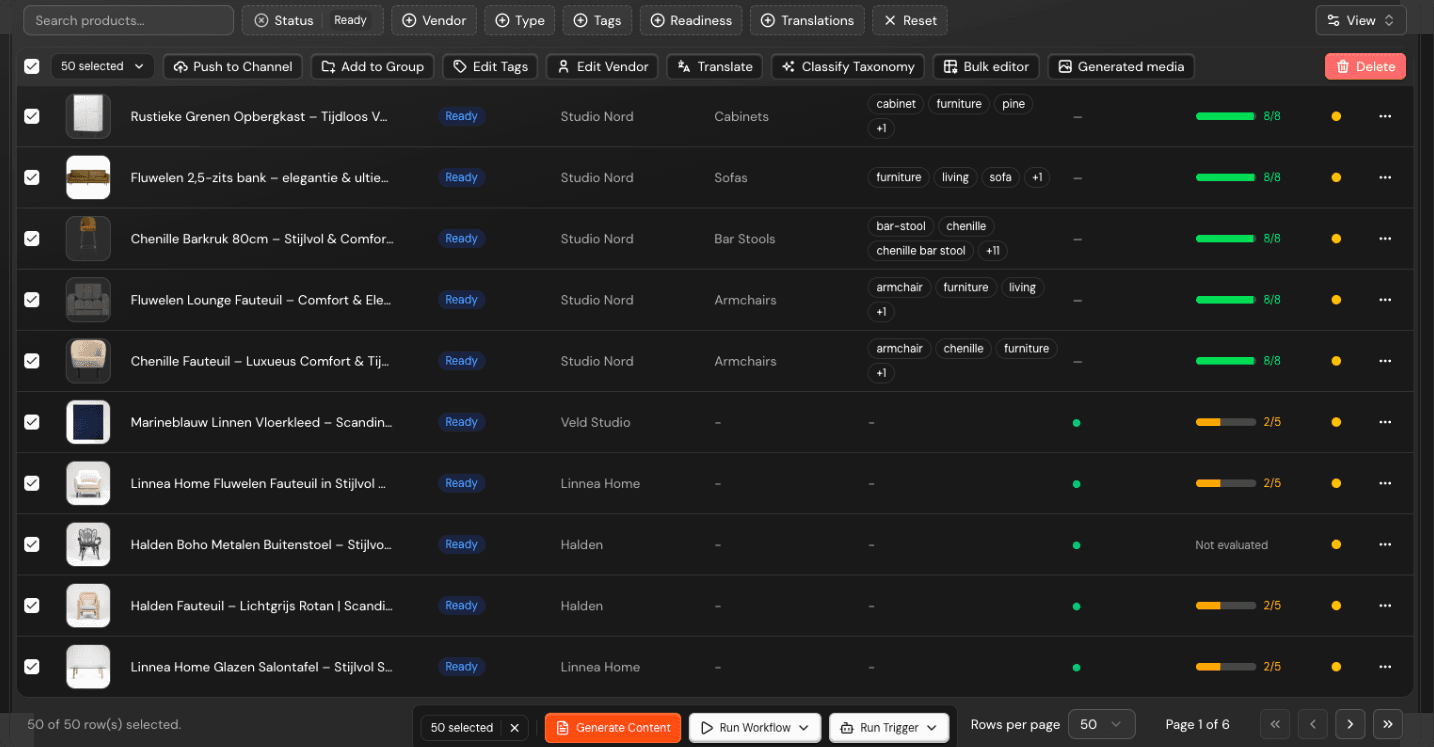
Product data, media, descriptions, translations, and channel sync usually live in seven separate tools that disagree with each other. Automated Commerce puts data, content, photography, and publishing in one interface, so your team manages the whole catalog from a single source of truth.
- ✓PIM, DAM, content, and feed management in one place
- ✓Bulk edit, bulk approve, bulk publish
- ✓One catalog the whole team works from
One supplier, one sheet, three ways of writing the same thing.
Ribbed Glass Table Lamp · Smoked
Structured, variants linked, metafields mapped. No spreadsheet in the middle.
Enrich thousands of Shopify products at once
Editing products one at a time in the Shopify admin caps what a team can do in a week. Point AI at the whole catalog instead: fill empty attributes, write descriptions, generate SEO, and translate across thousands of products in one pass. Every change is staged and previewed, and nothing reaches your live store until you sign off.
- ✓Bulk enrichment across thousands of products at once
- ✓Descriptions, attributes, SEO, and translation in one pass
- ✓Staged and previewed; nothing reaches Shopify without sign-off
What a PIM does, and the layer Automated Commerce adds
A PIM (product information management) system holds your product data, attributes, and media as one source of truth and keeps it consistent across channels. That is the baseline. Automated Commerce adds the layer on top: it does not just store the catalog, it enriches it, photographs it, translates it, and publishes it, then keeps it right across every channel, every day.
One source of truth for your catalog
Every product, variant, metafield, and image in one structured place, synced both ways with Shopify so your store and your data never drift apart.
AI enrichment, approved in bulk
Automated Commerce fills empty attributes, writes descriptions, and generates SEO across thousands of products. You approve in bulk before anything reaches Shopify.
Product photography built in
Generate product photography and 3D models from the same system that manages your data. No separate DAM, no photo studio, no handoff.
Translate and publish everywhere
Translate the whole catalog and publish to Shopify and every sales channel, then keep them in sync as products change.
How Automated Commerce compares to other PIMs
Akeneo, Salsify, Plytix, and inRiver are capable PIMs, but most are built for long implementations and stop at managing data. Automated Commerce is Shopify-first and operator-led: live in hours, with AI content, product photography, translation, and channel reconciliation built in rather than bought separately. We keep the comparison honest.
See the PIM software comparisonHow it works
From a connected store to a catalog that runs itself, in three steps.
Shopify PIM questions
Part of one platform
A Shopify PIM is the foundation. From there Automated Commerce imports, publishes, and keeps your catalog in sync.
PIM software
The capabilities of modern PIM software, beyond a single store.
Smart import
Pull supplier feeds and spreadsheets into one structured catalog.
Shopify integration
Two-way sync with your store, including metafields and variants.
PIM software comparison
How Automated Commerce compares to other PIMs.
Give your Shopify catalog one source of truth
Connect your store and watch Automated Commerce import, enrich, and ready your products for Shopify.
No integrator. Live in hours.