

Automated Commerce
Back to Cases
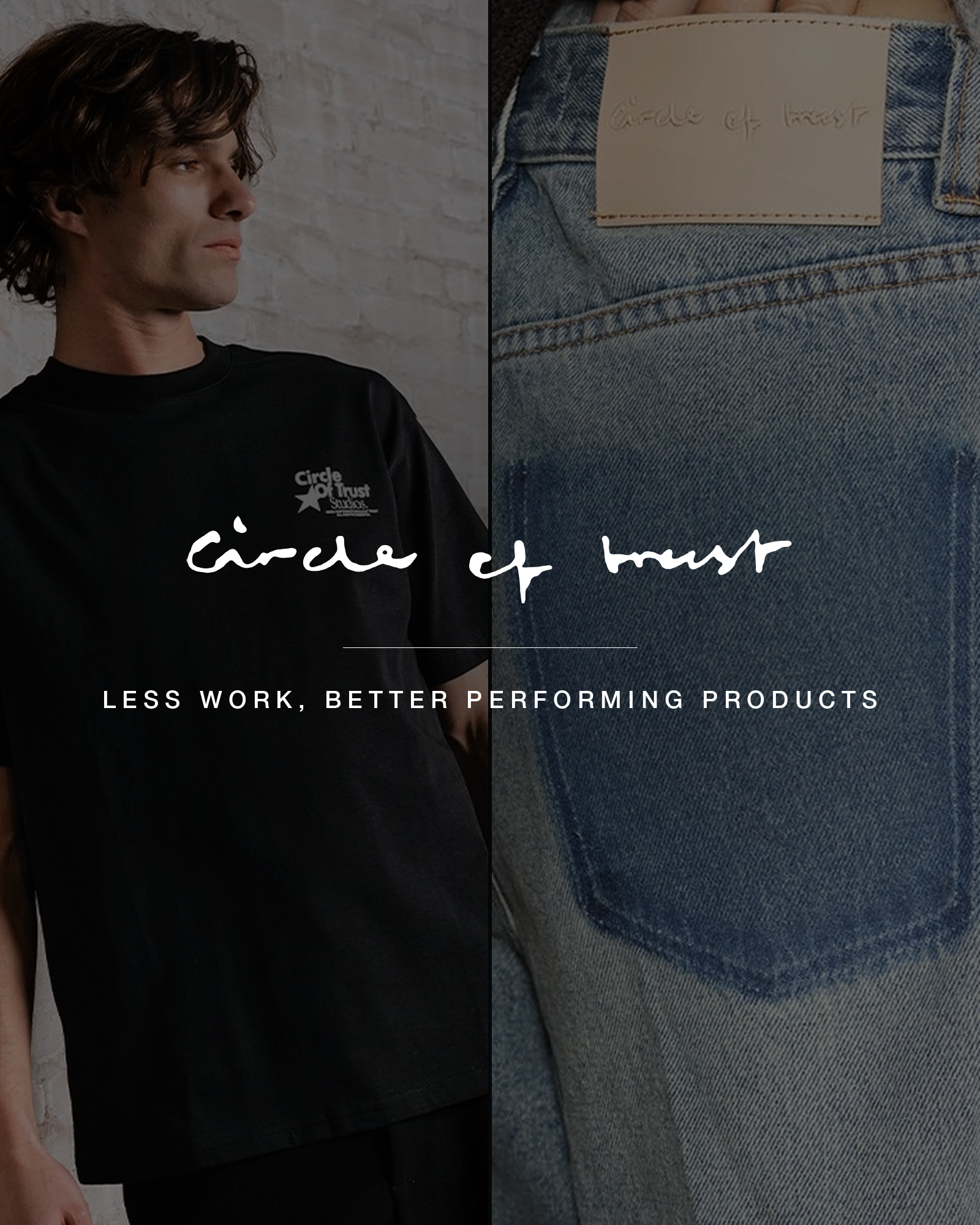
Circle of Trust: a black Circle of Trust Studios tee and the back pocket of Circle of Trust jeans, with the Circle of Trust wordmark

Circle of Trust × Automated Commerce

Circle of Trust, the Dutch denim and fashion label, is building an agentic product pipeline with Automated Commerce: less work per collection, faster to market, and product pages that perform better.

Max de SmitBy Max de Smit
success-storyfashionproduct-contentseo

Circle of Trust is a Dutch denim and fashion label from Amstelveen with more than 7,000 product pages and a new collection every season. Together with Automated Commerce it is building an agentic product pipeline: new products come in, agents do the work, and the team reviews and sets the direction. The goal is less work per collection, a faster route to market, and product pages that perform better in Dutch and English.

About Circle of Trust

Circle of Trust makes clothing for women, men and girls, from jeans to dresses, with denim at its core. The brand sells through its own webshop in Dutch and English. Every colourway gets its own product page, which is how the catalog grows past 7,000 pages.

The challenge

Every new drop brings the same work back: titles, descriptions, specs, attributes, collection pages, translations and SEO. Per product, per colourway, largely by hand. Circle of Trust's Dutch content is strong. Keeping the English at the same level, and adding the structured data that search engines and AI assistants read, multiplies that work across thousands of pages. That work is where time-to-market goes.

How Automated Commerce helps

Automated Commerce turns that work into a pipeline that runs on the catalog itself. The team sets the brand's tone of voice, content formats and rules once, and agents apply them to every new product and collection:

  • Product texts: titles, descriptions and specs, written in Dutch and English from one source.
  • Attributes and metafields: richer, structured product data on every item, so filters, feeds and search have more to work with.
  • SEO collection texts and structured data on every page, readable for Google and for AI search.
  • Internal linking: product and collection texts link to the right related products and collections, so shoppers and search engines find their way through the range.

The team stays in control. Output is reviewed before it goes live, and the rules are refined collection by collection.

Where it stands

Circle of Trust signed in September 2026 and onboarding is underway. The agreed order starts with SEO collection texts and structured data, because they add value from day one. Dutch and English product content follows. On-model photography workflows have already been tested on Circle of Trust's own garments and are ready when the team wants them.

Frequently asked questions

It is a setup where AI agents do the recurring product work, such as texts, attributes, translations and SEO, as soon as new products arrive. The team defines the rules and reviews the output. For a fashion label like Circle of Trust, with a new collection every season, that removes the same manual work from every drop.
By removing the manual steps between a new product and a live page. Titles, descriptions, specs, attributes and collection texts are the usual bottleneck, because they are written per product and per colourway. When that work runs as a pipeline, a collection with hundreds of colourway pages no longer waits on copywriting.
Internal links tell search engines which pages belong together and which ones matter most, and they help shoppers move from one product to related items. On a catalog with thousands of colourway pages, linking product and collection texts to the right related pages spreads authority across the range instead of leaving pages isolated.
Yes, if the brand's tone and formats are written down and used as rules. The agents write from those documents rather than from a generic prompt, in Dutch and English from one source. The team reviews the output before it goes live, and the rules are tightened as each collection comes through.
Generate it from the product data you already hold instead of editing pages by hand. Structured product data such as materials, fit, category and price can be published as markup on every page at once. That makes a catalog of 7,000+ pages readable for Google and for AI assistants that answer shopping questions.
The team keeps the final say: output is reviewed before it goes live. Review effort drops as the rules mature, because recurring corrections are fixed once in the rules instead of on every product. The aim is a team that directs and approves, not one that writes each title and description itself.

Stay Ahead: Newsletter

Get the latest insights from the AI-industry and updates on new platform features

Circle of Trust × Automated Commerce - Automated Commerce